Community Follies
How can underused neighbourhood spaces support activities initiated by young people?
A Sustainable Commons Infrastructure for Youth-Led Informal Activities
Project Overview
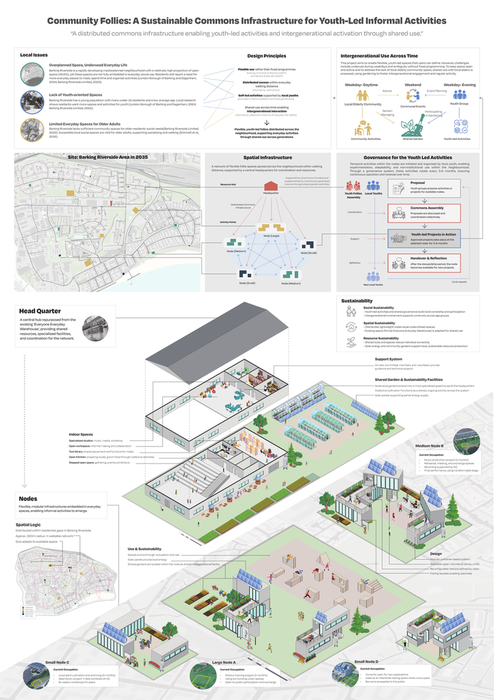
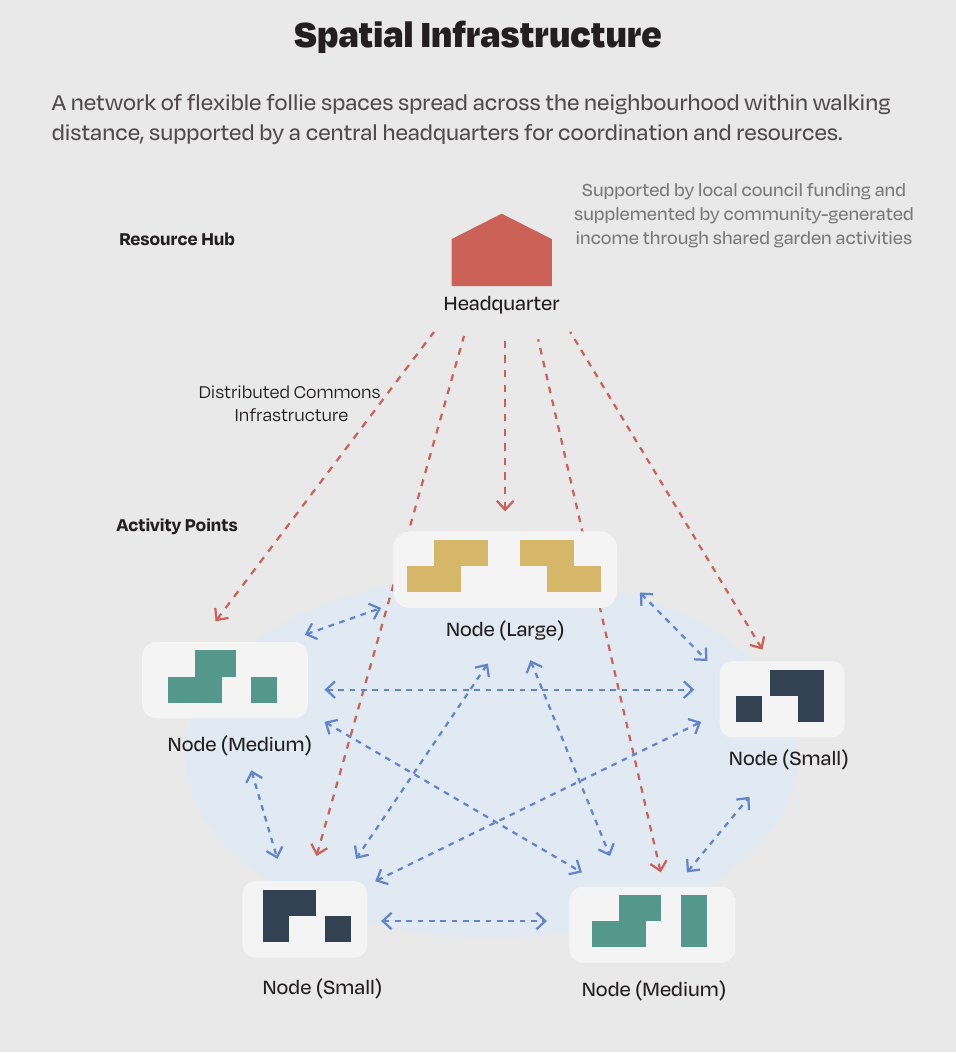
Community Follies proposes a distributed network of flexible spaces across Barking Riverside where young people can initiate and develop their own projects.
Small, medium and large nodes are placed within everyday walking distance and can support activities ranging from music and making to gardening and physical training. Projects occupy these spaces for a limited period before the nodes become available for new uses.
A central headquarters connects the network by providing shared resources, specialist facilities and practical support.
01. A Distributed Spatial Infrastructure
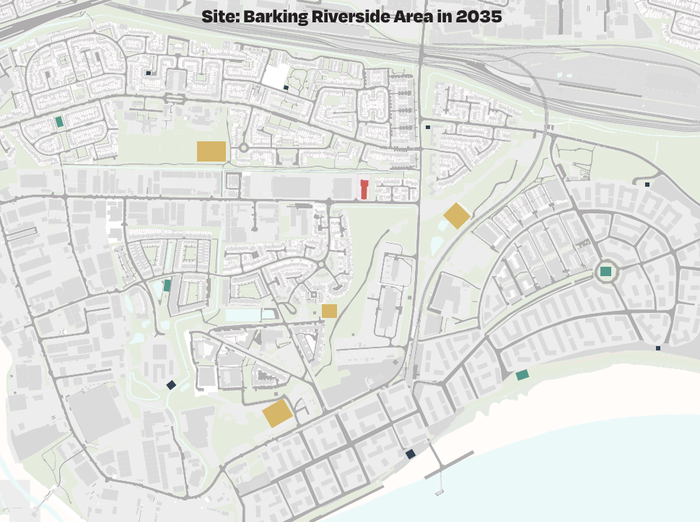
The proposal places a network of small structures within residential gaps across Barking Riverside.
Different node sizes respond to the space available at each location. The nodes remain connected to a central headquarters within the neighbourhood, creating a wider network of spaces and resources.
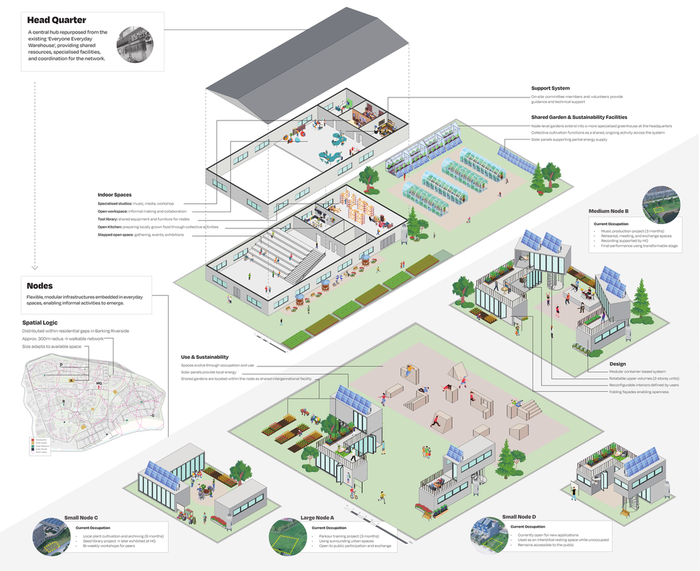
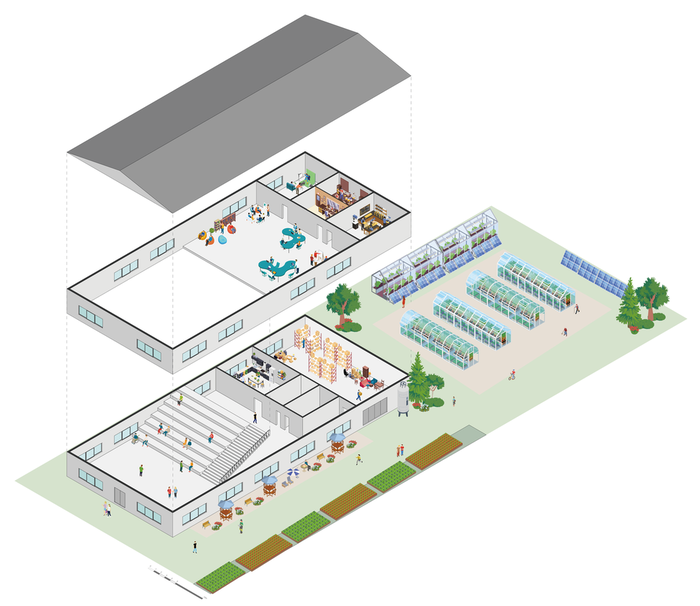
Headquarters
The headquarters provides facilities that cannot be accommodated within individual nodes.
It includes workshops, studios, shared tools and spaces for meetings, events and collective activities. Volunteers and committee members provide practical and technical support for projects across the network.
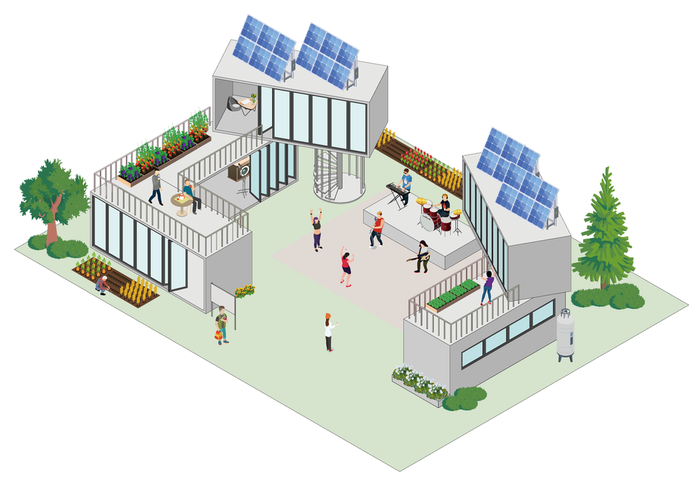
Nodes
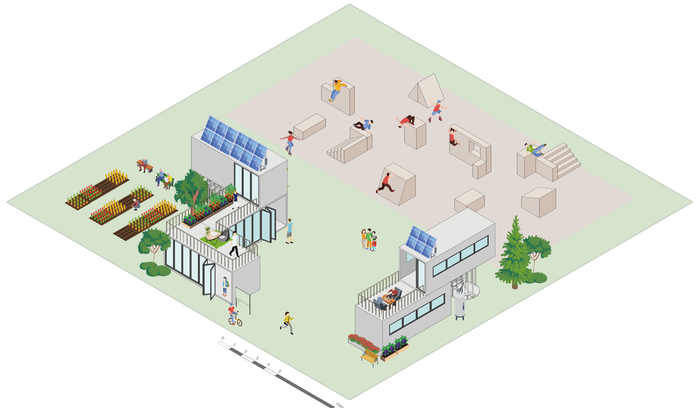
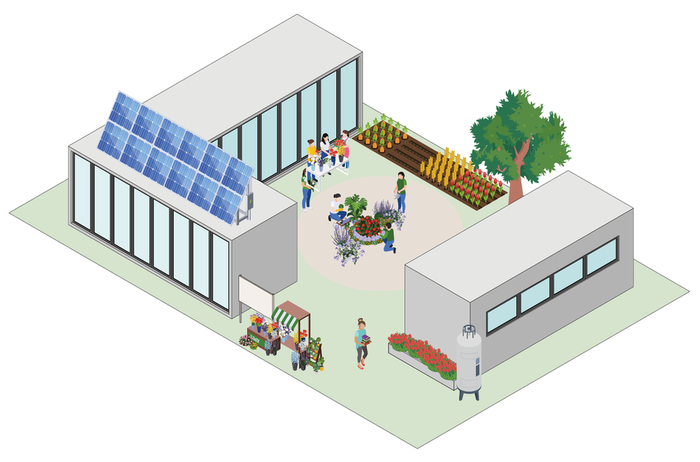
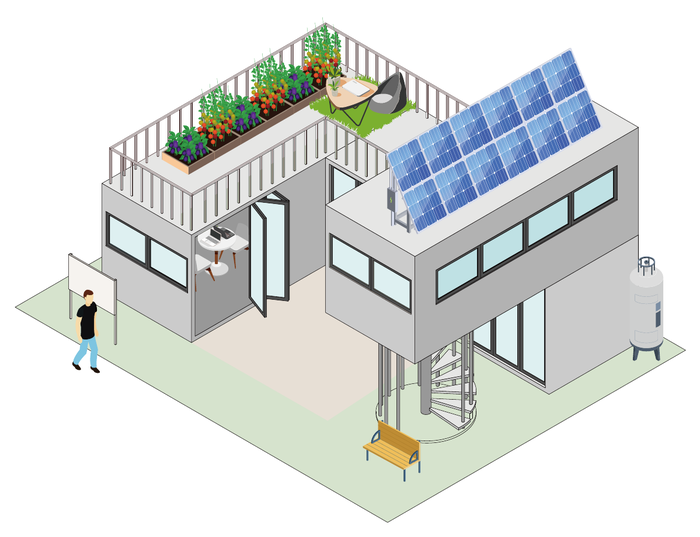
Each node provides a flexible structure that can change with its occupants.
Modular structures, folding façades and reconfigurable interiors allow groups to organise the space according to their activities. When one project ends, the same structure can be adapted by the next group.
02. Shared Across Time
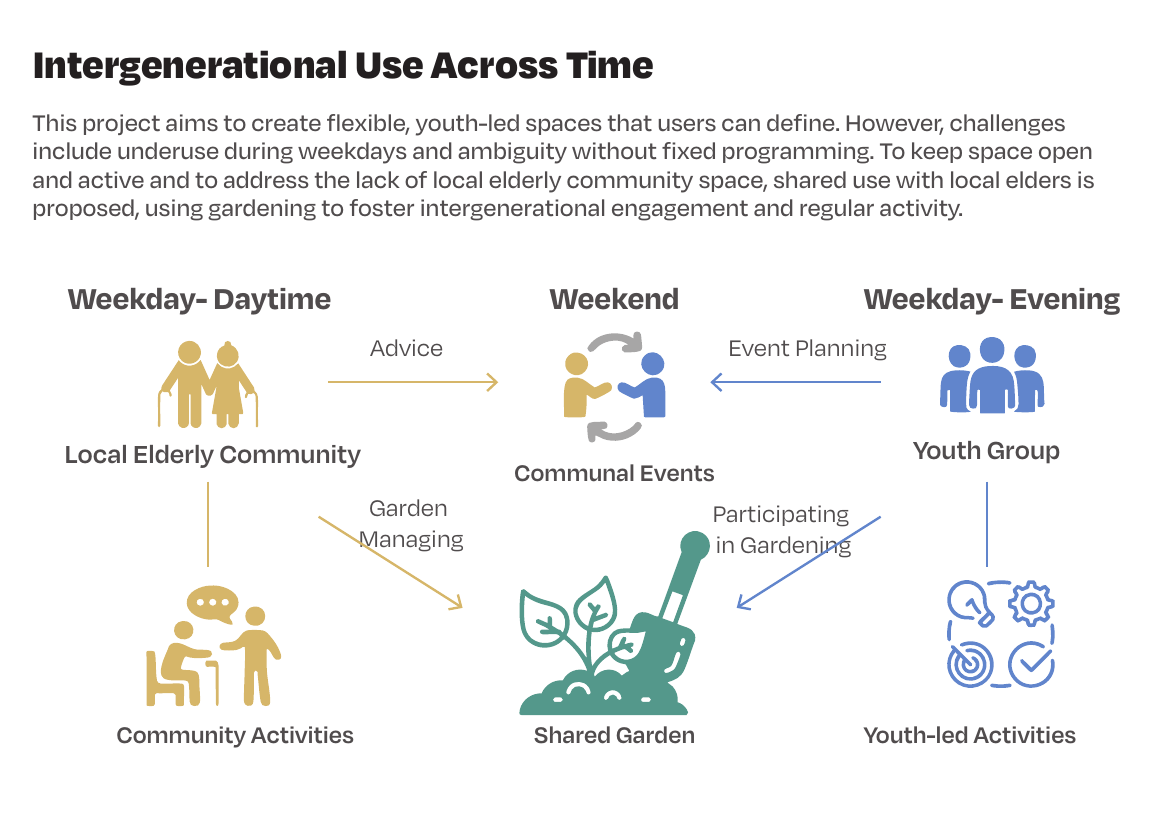
The same spaces can support different forms of activity throughout the day and week.
Youth groups may use the nodes for their projects during evenings and weekends, while local older residents can use them for gardening and community activities during quieter periods.
Shared gardens provide a point of continuity between these different users, allowing relationships to develop through repeated use of the same spaces.
03. A Commons in Rotation
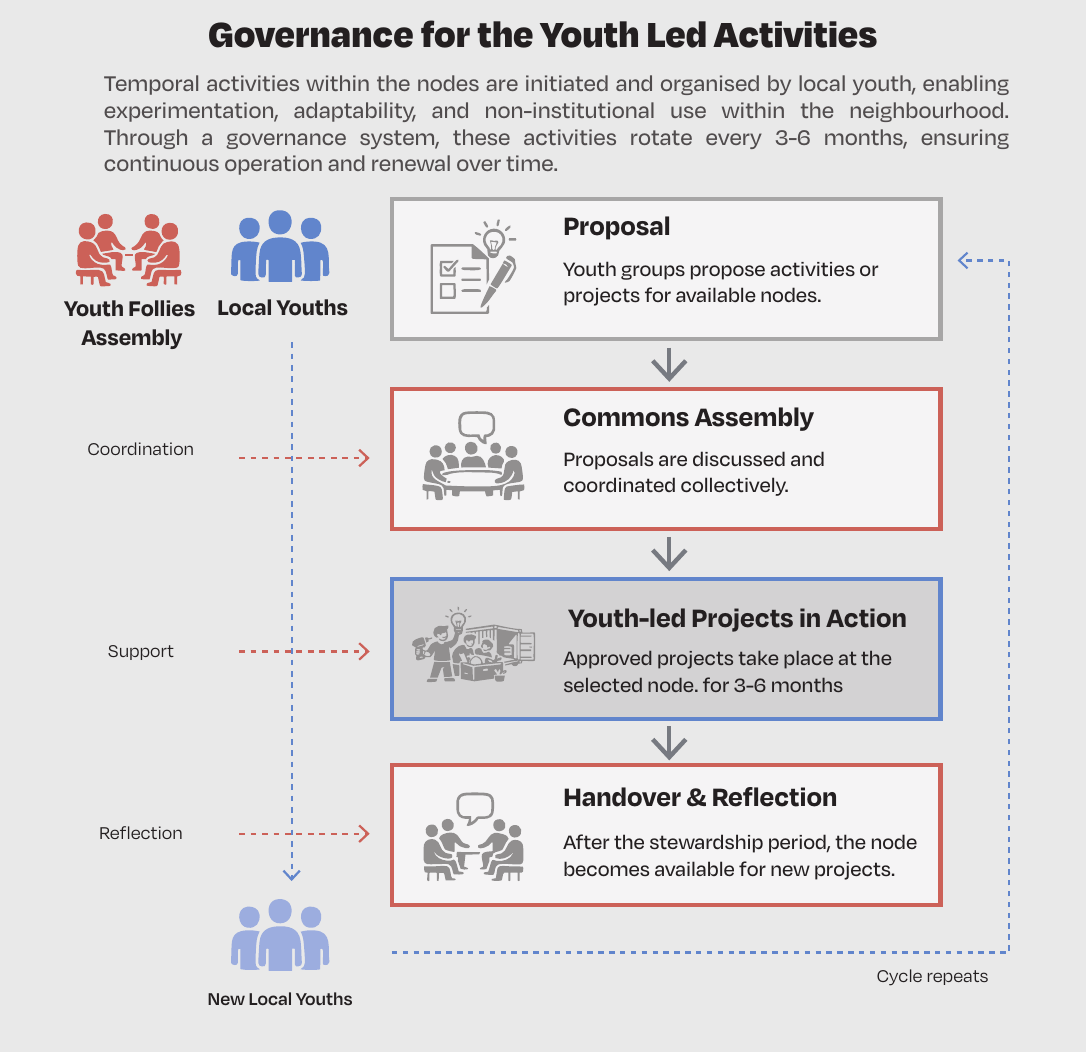
Young people propose projects for available nodes and discuss them through a local commons assembly.
Selected projects occupy a node for three to six months. At the end of each period, participants reflect on their experience and hand the space over so that another project can begin.
The physical network remains in place while its activities and occupants continue to change over time.