Paper: Unrealised Imaginations
How can architectural practice operate without physical construction through movement, rhythm and participation?
Experiments in reading and translating urban space
Paper: Unrealised Imaginations began with overlooked spaces in the city and a question about what architectural practice could do without constructing new buildings.
A series of experiments tested different ways of reading existing urban conditions. Walking routes were recorded as rhythms, spatial relationships were reduced into diagrams, and these observations were translated through sound, movement and temporary interventions.
As the experiments developed, the focus shifted from proposing new objects towards ways of observing and interpreting what was already there.
01. Recording Urban Rhythm
The first experiments explored how the experience of walking through the city could be recorded over time.
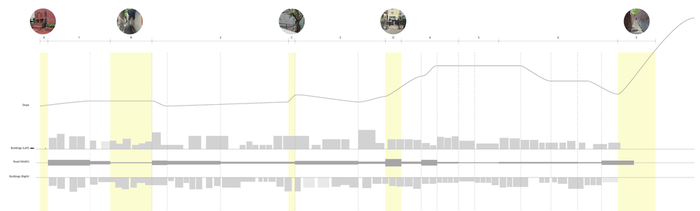
A route through Hyehwa was divided into a sequence of spatial conditions. Changes in slope, road width and the buildings on either side were mapped along the walk.
The resulting score described the route as a changing sequence rather than a fixed plan.
02. Reading Interstitial Spaces
The research then moved into specific spaces around Daehangno.
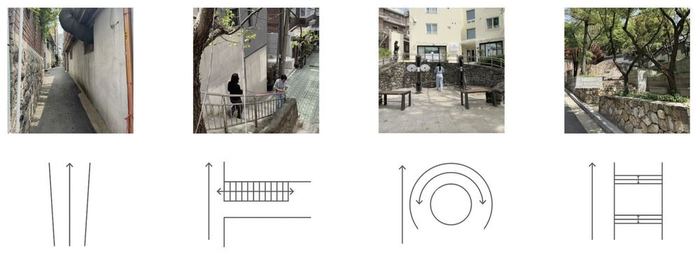
Four sites were selected for their different spatial conditions. Narrow passages, stairs, open spaces and changes in level produced different possibilities for movement and encounter.
Simple diagrams reduced each site to its basic spatial relationships and became starting points for further experiments.
03. Translating Rhythm into Sound
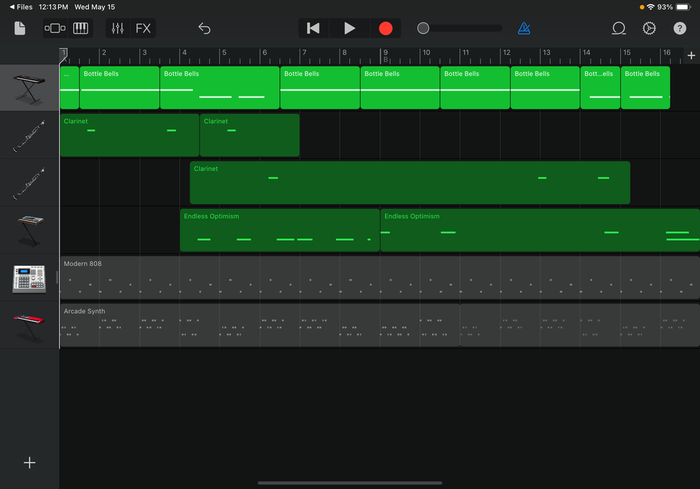
The recorded spatial rhythms were then translated into sound.
Different elements of the route became separate musical layers. Their duration and sequence followed changes observed during the walk.
This experiment tested what happened when a spatial experience was transferred into another medium.
04. Reading Space through the Body
The experiments gradually moved from graphic and sonic translation towards the body.
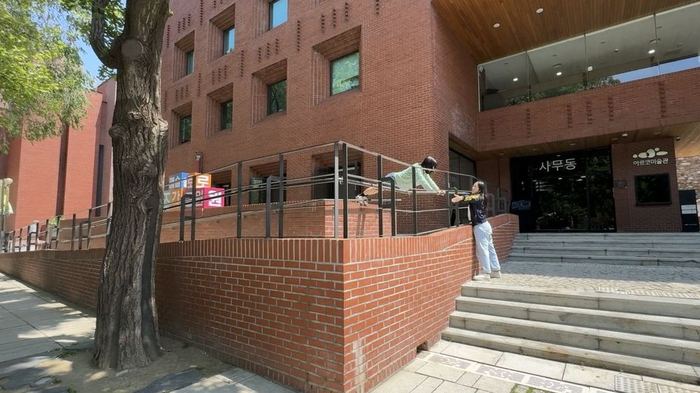
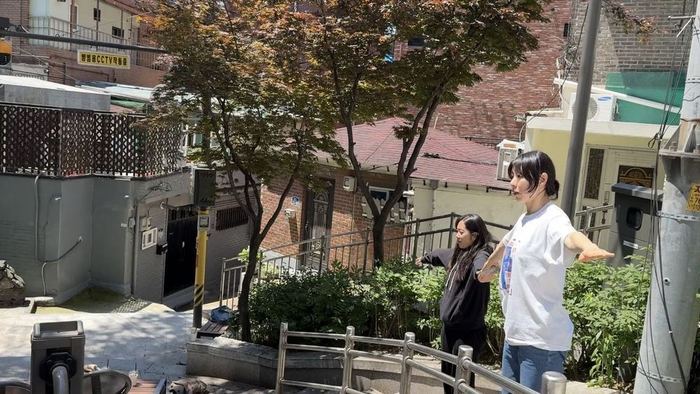
Performers responded to stairs, slopes, boundaries and changes in level through movement. Their bodies provided another way to test how the physical conditions of each site could be perceived.
05. Testing Spatial Relationships
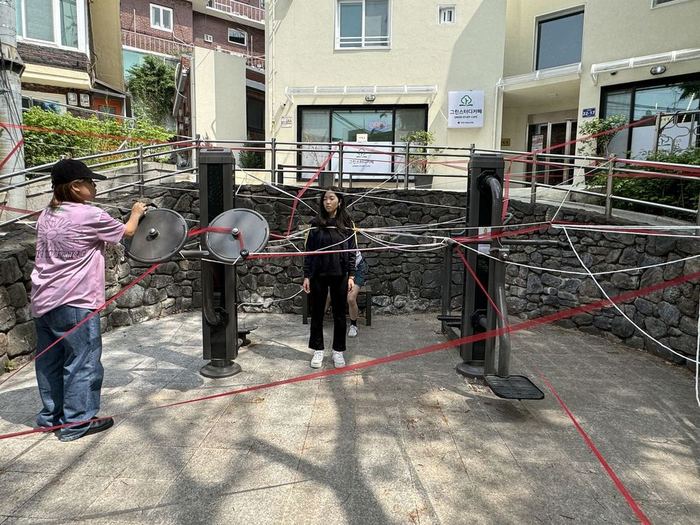
Temporary interventions were introduced to make spatial conditions physically perceptible.
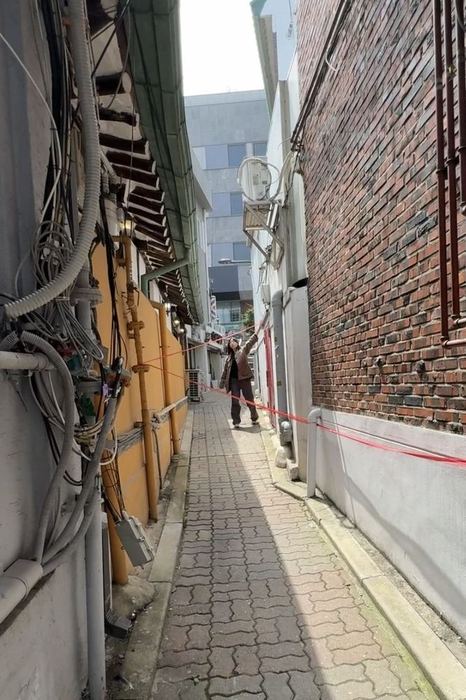
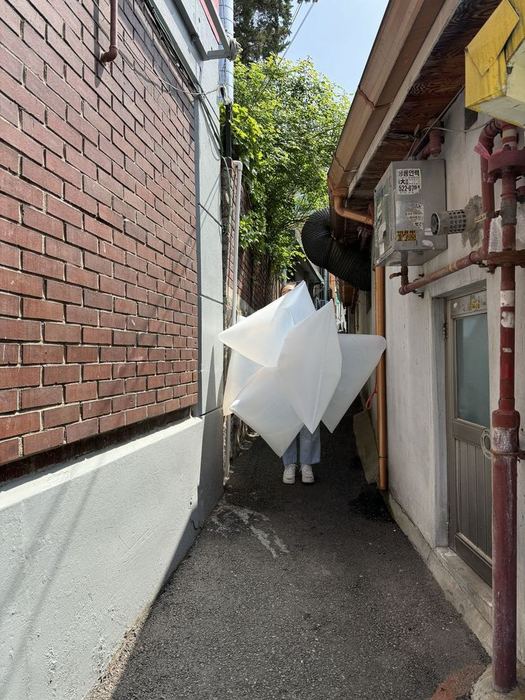
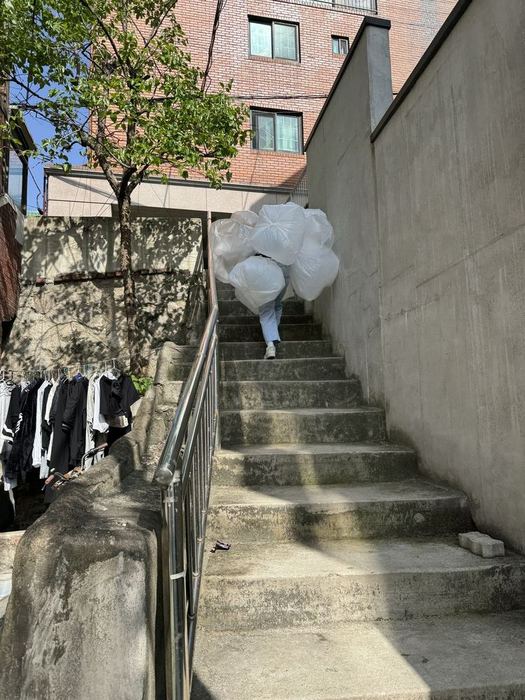
Thread connected surfaces and boundaries across a site, tracing relationships between spaces that were otherwise difficult to see. Lightweight objects responded to narrower spaces and changes in level, changing form as they encountered each location.
06. From Experiment to Performance
Across these experiments, the project developed a different way of approaching the city.
Walking became a way of observing change over time. Notation allowed spatial conditions to be separated and reorganised. Sound and movement tested how those observations changed when translated into another form. Temporary interventions made relationships between bodies and spaces visible.
These experiments eventually led to The Fantasy Architects’ Guide to the Gaps of the City, where the process expanded into a participatory performance. Audiences were invited to walk through the city, notice overlooked spaces and construct their own interpretations of them.
Research Continued
Questions first explored through these experiments later returned in City Score, an ongoing research project examining how embodied urban experience can be recorded, translated and re-performed.
→ City Score